Preventing Tick Misinformation
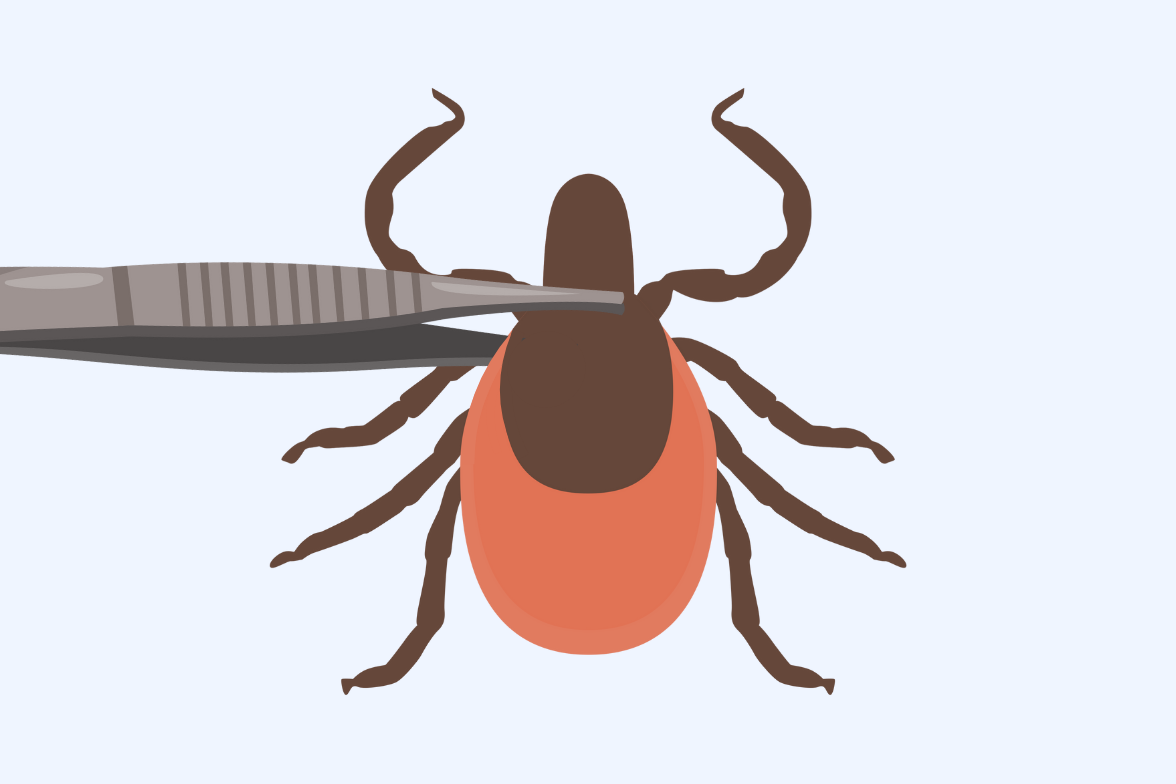
Tweezers to the Rescue
Using fine-tipped tweezers is the safest and most effective way to remove a tick.

Ground-Level Ambushers
Ticks wait on low grasses, shrubs, and leaf litter to attach to passing hosts.
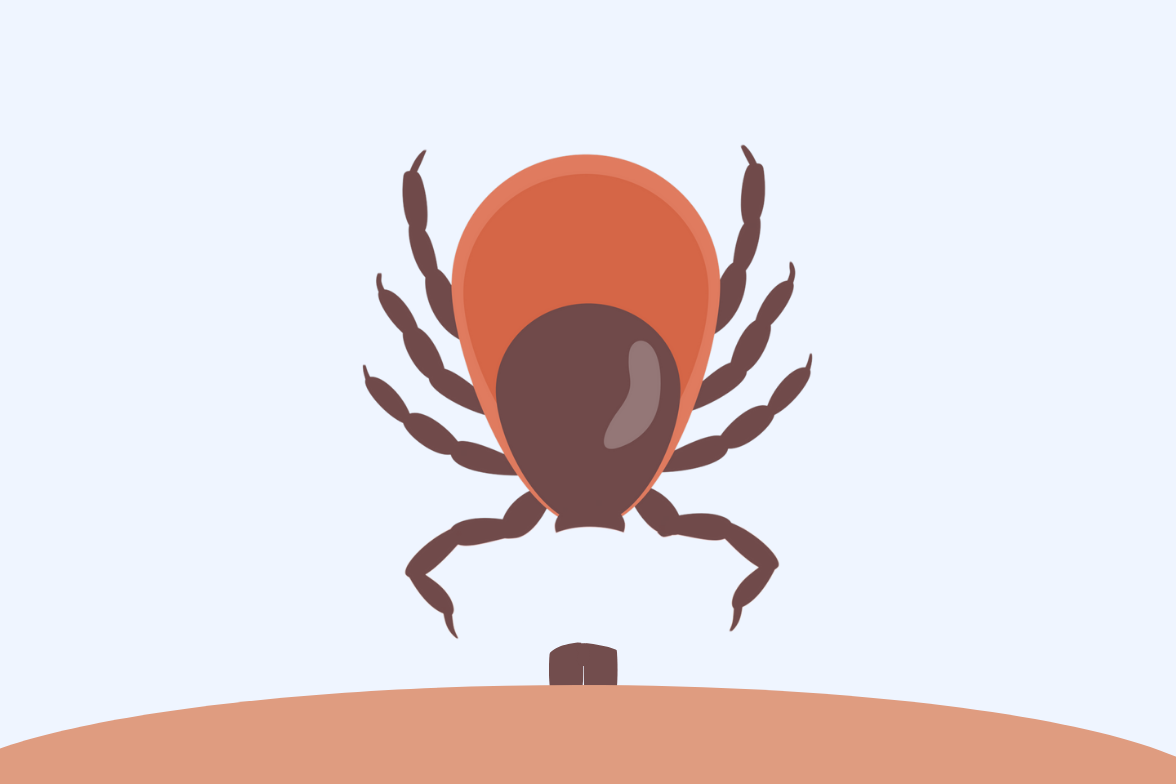
Mouthparts are Minor
If a tick’s mouthparts remain in the skin after removal, they do not continue to spread disease. It will come out like a splinter.
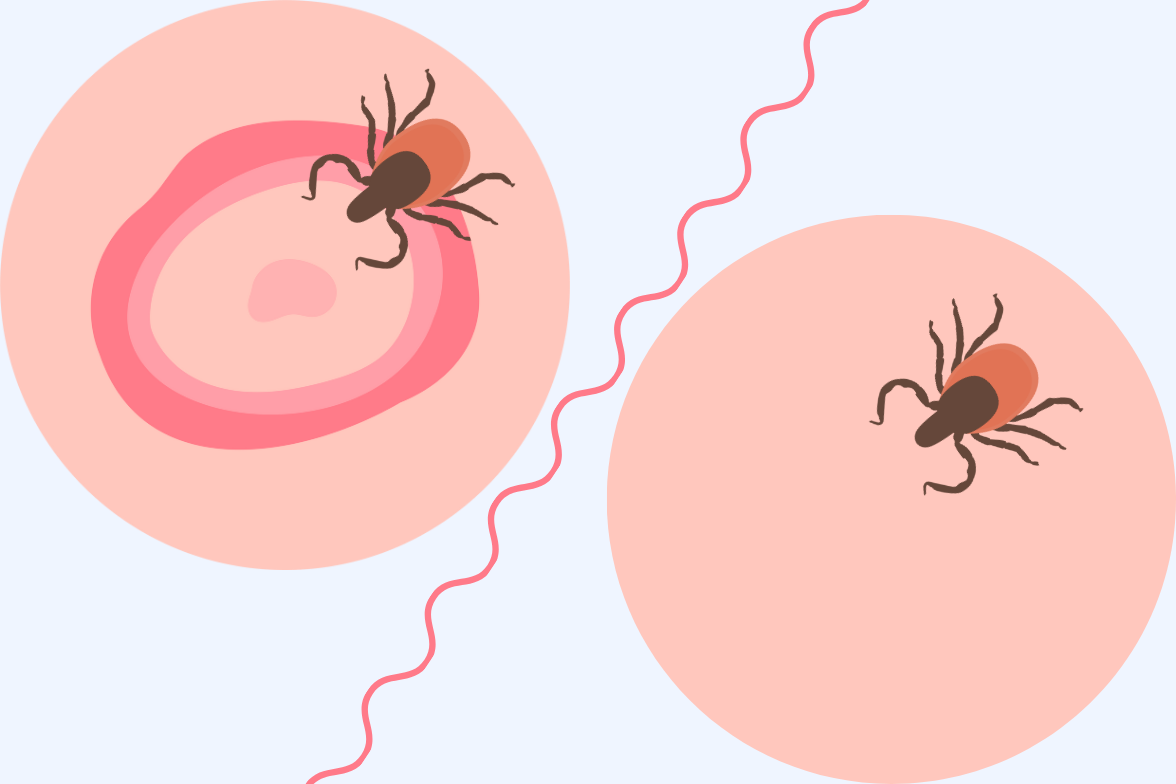
Bullseye? Maybe Not
Not everyone with Lyme disease develops the classic bull’s-eye rash.
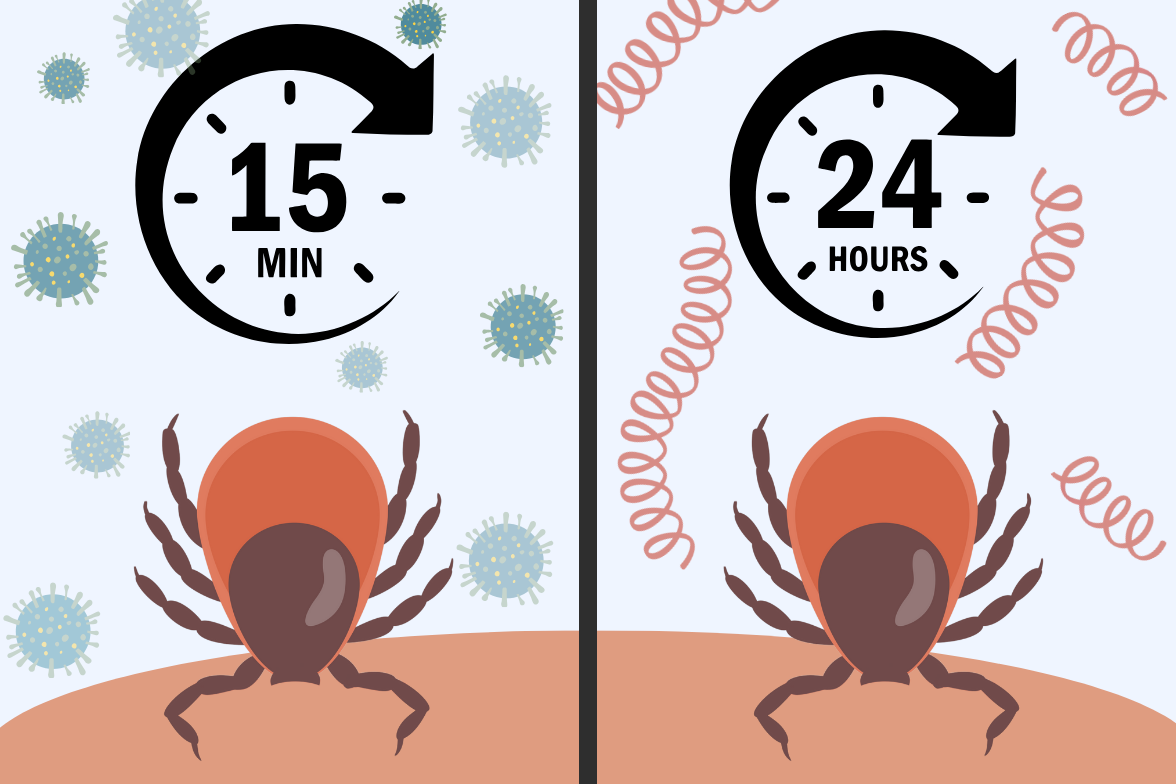
Tick Tock
Lyme disease usually requires 24+ hours of tick attachment, but some pathogens, like Powassan virus, can transmit in minutes.
Tick Myth Q&A
Fact: The best way to remove a tick is to use fine-tipped tweezers. DO NOT use a match, lighter, or petroleum jelly to remove a tick.
Fact: The mouthparts of a tick DO NOT continue to transmit disease if they break off while you are removing a tick from your skin.
Fact: Ticks CANNOT jump and they DO NOT fall from trees. They grab onto us from low vegetation and live on the ground in leaf litter.
Fact: About 20% of people with Lyme infections DO NOT get a bulls-eye rash.
Fact: For Lyme disease, ticks must be attached for at least 24 hours, but an infected deer tick can transmit the deadly Powassan virus in minutes. Different pathogens take different amounts of time for transmission.
Fact: Ticks are out and willing to bite people and pets all day and all night.